
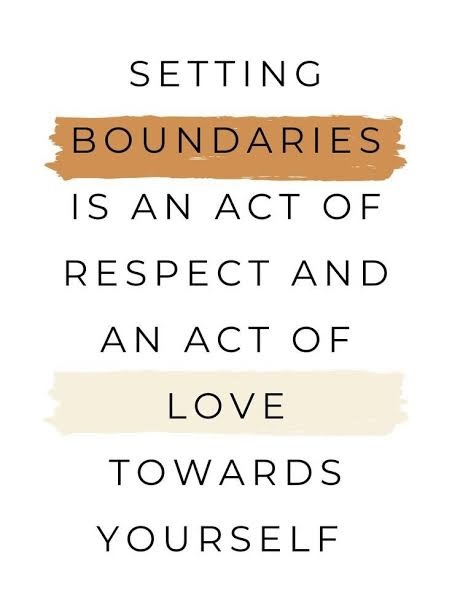
Many people grow up believing that being kind means being constantly available. We learn to respond quickly, to soften our discomfort, and to place other people’s needs ahead of our own. Over time, this becomes habit. We say yes when we mean no. We explain when we want to rest. We stay silent to avoid conflict. Eventually, we confuse self-sacrifice with goodness.
Boundaries interrupt that pattern. They force honesty into spaces where avoidance once lived. That honesty can feel uncomfortable, especially when others have grown used to unrestricted access to you.

What Saying “No” Actually Does
A boundary is not an emotional outburst or a demand. It is a clear statement of what you can give and what you cannot. When you say no, you are not rejecting a person. You are defining a limit.
Healthy connection depends on clarity. People cannot respect what is never expressed. When your expectations remain unspoken, resentment grows quietly. Clear boundaries remove confusion. They tell others how to engage with you in a way that does not cause harm.
Some people welcome that clarity. Others resist it. Resistance usually appears when a boundary interrupts a pattern that once worked in their favor.
Guilt and the Misunderstanding of Protection
Many people feel guilty after setting a boundary. They worry about being unkind or selfish. This guilt often comes from the belief that prioritizing yourself causes harm to others.
A boundary does not punish anyone. It protects your emotional and mental capacity. It marks the line where responsibility ends. You are allowed to decide what you can manage without damaging yourself.
When you stop over-explaining your choices, you stop asking for permission to take care of yourself. Peace does not require justification.
When People Leave
There is a real grief that comes when someone pulls away after you assert yourself. It hurts because it feels personal. It feels final. Many people label this experience as failure or loss.
In truth, some connections exist only under certain conditions. When those conditions change, the connection dissolves. That does not mean you did something wrong. It means the relationship depended on your silence or compliance.
People who respect you respond to boundaries with adjustment. People who do not respect you respond with pressure. That pressure is information.

Respect Is Not a Reward
Boundaries reveal truth. They show who listens, who adapts, and who resists accountability. When you maintain your limits, you change the expectations around you. Respect stops being something you chase or earn through endurance. It becomes the baseline for connection.
The people who remain after boundaries are the people who see you as a whole person. The ones who leave make space for healthier relationships to take root.
Losing access is not always a loss. Sometimes it is the beginning of living with dignity, clarity, and self-respect.